Local detail
What Changes With the Season
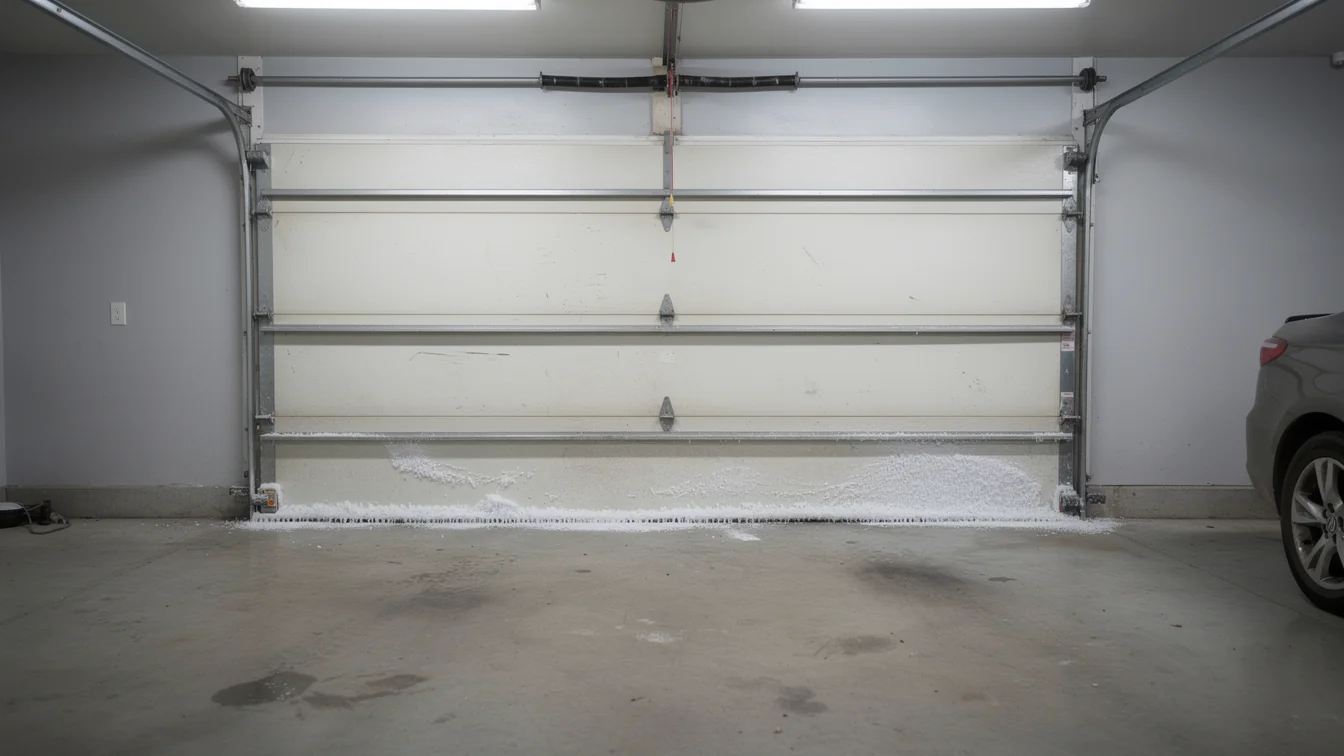
Tualatin sits in a cold-moderate climate band, which means the door hardware deals with a real swing between summer heat and winter cold rather than one steady condition year-round. That swing is the first thing a tech accounts for before touching a single bolt. Steel contracts in cold mornings and expands again by afternoon, and torsion springs that were wound to spec in July can feel noticeably stiffer or looser by January. On a cold-snap morning we check spring tension before we check anything else, because a spring that's fighting the cold will throw off balance readings on everything downstream of it - the opener's force sensing, the cable tension, even how square the door sits in the track. We also look at weatherstripping compression along the bottom seal, since repeated expansion and contraction is what splits vinyl seals faster here than in a climate with less seasonal swing. None of this is dramatic weather - no named storm, no flood line - just the ordinary grind of a temperate Pacific Northwest year working on hardware that was never built to be perfectly stable. A door that's been fine for months can start sticking or reversing on its own the first cold week, and that's usually why the call comes in.
The area
What Local Conditions Do
Housing in this service area was mostly built between 1964 and 2006, with the bulk of it going up in the 1980s and 90s across the 34 named neighborhoods we work in. That matters because it tells us what's probably behind the door panel before we open the garage. A house from the early 1980s likely has its original torsion hardware, or a first-generation replacement from the 90s, which means galvanized springs rated for a cycle count that's long since been used up. We check spring wind type and drum size first on these, because 1980s-era torsion setups often use hardware sizing that's been superseded twice over, and matching it wrong throws the whole balance off. Newer builds in the later end of that 1964-2006 range are more likely to have factory opener safety sensors already wired in, so on those we're checking sensor alignment and reversal force before spring tension. We don't guess the house's age - we ask when it was built, because a tech walking in blind on a 1980s torsion system versus a 2000s extension-spring setup is solving two different problems with the same toolbox.
What we find
The Cost of This Job
We don't quote a number without seeing the door, so we won't put one here. What we can say is what drives the cost up or down once we're looking at it: whether the spring size matches factory original or has been mismatched by a prior repair, whether the opener is original to a 1980s or 90s install and needs full replacement rather than a sensor swap, and whether track misalignment is cosmetic or has already bent a roller. The service area runs about 130,959 households, with roughly 66,619 of those in owner-occupied houses, and a median household income near $101,953 - which tells us most of the work we do is planned repair and replacement, not emergency triage, because homeowners here tend to call before a spring snaps rather than after. That changes the job: a scheduled inspection catches a worn cable before it fails, which is cheaper and faster than an emergency call where the door is already off track. The honest limitation: if your opener predates factory safety-reversal sensors, we're not going to patch around that - current code requires those sensors, and we'll tell you replacement is the right call even if it costs more up front than a quick fix.
How we work
The Situation
Most of what we see starts with a door that's gotten slow, loud, or uneven - not a dramatic failure. Given that the bulk of local housing dates to the 1980s and 90s, the first check on almost every call is spring age and wind count, because that hardware has had decades to fatigue even if it looks fine from the outside. Second is the track and roller alignment, since original steel rollers from that era have usually outlived their smooth-rolling life and are the quiet cause of a door that shudders halfway up. Third, especially on anything built before the later stretch of the 1964-2006 range, is whether the opener has modern safety reversal - a lot of older units in this area were installed before that was standard, and we flag it even when it's not what the homeowner called about. We check these in that order because fixing a noisy track on a door with a failing spring just masks the real problem for a few more weeks. If a repair would cost most of the way to a new door's price, we say so rather than stack small fixes on aging hardware.
Talk to a local pro
Garage door trouble in Tualatin?
Same-day service with honest, upfront quotes.