Local detail
What Changes With the Season
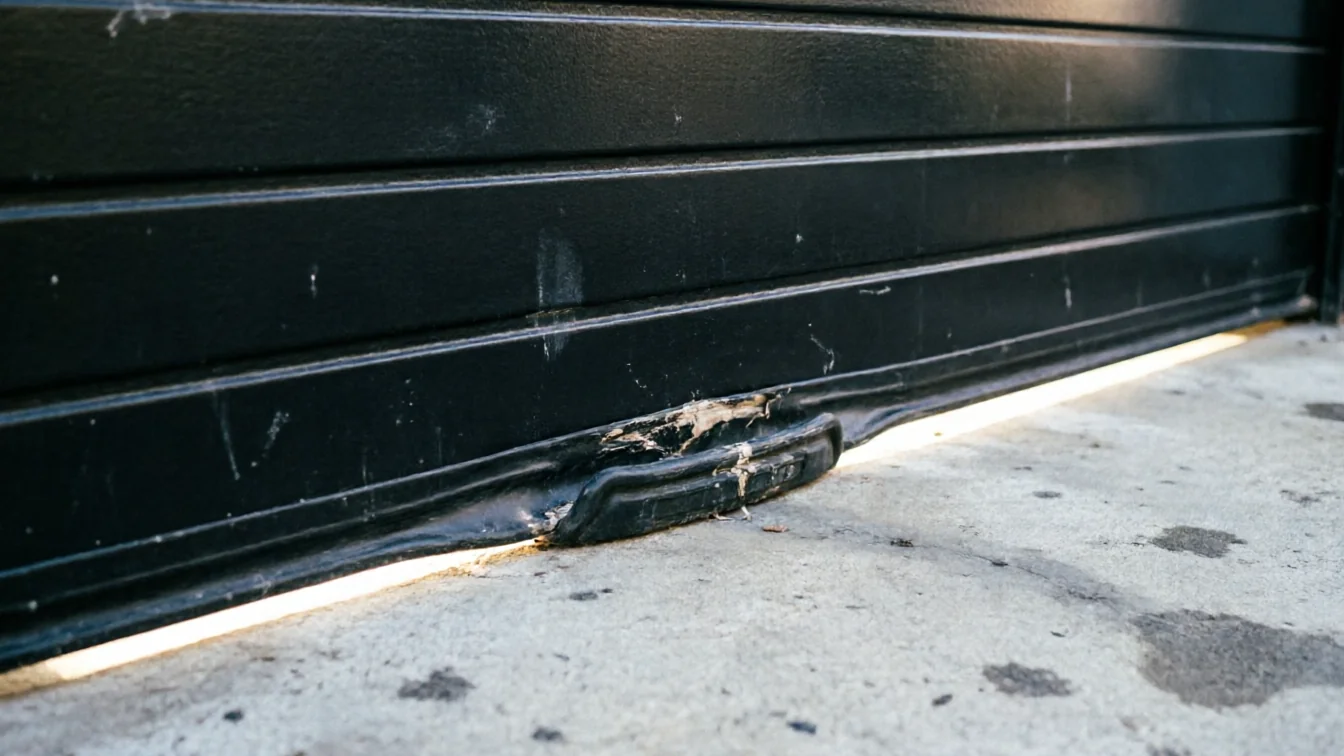
Most garage doors in this part of Tualatin went in when the house did, and that means seals rated for a build year somewhere between 1964 and 2006, with the bulk of the stock dating to the 1980s and 90s. Vinyl bottom seals from that era weren't built to last forty years. They harden, crack at the corners, and pull away from the track as the door settles.
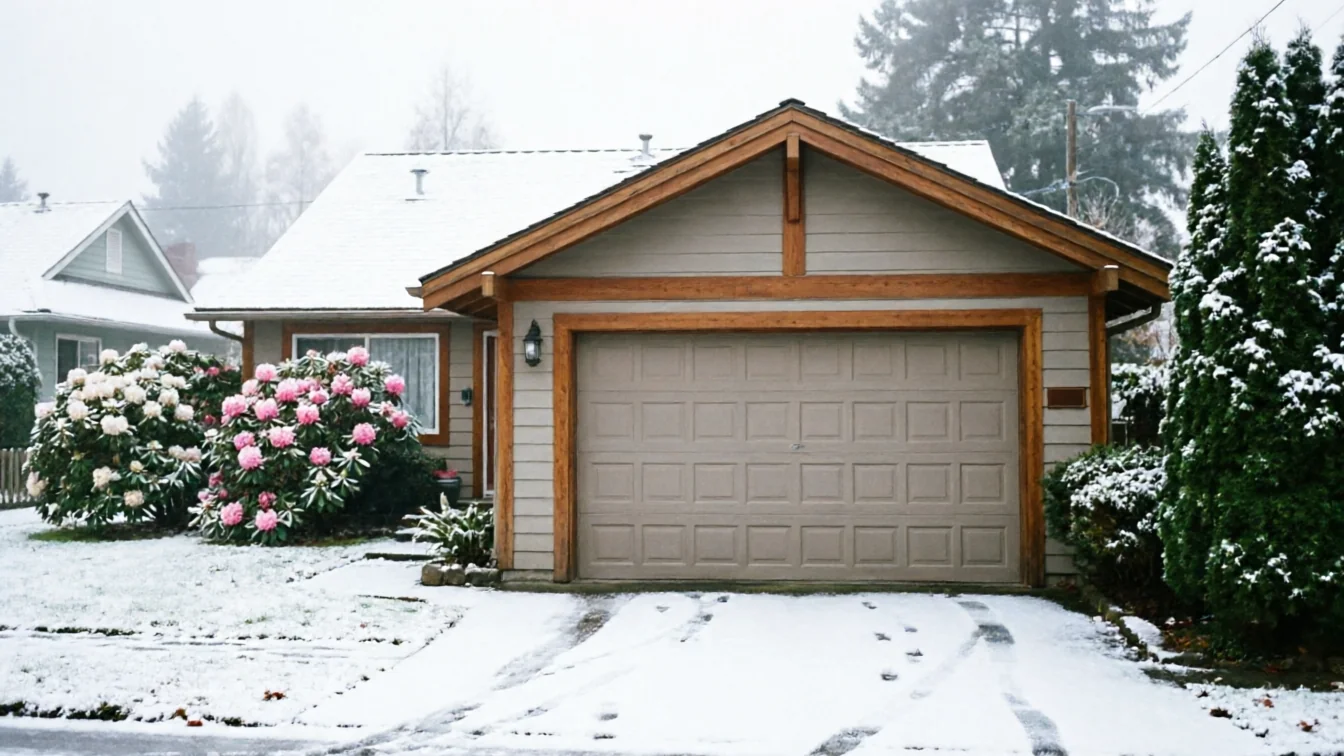
You'll notice it first in late fall, when the cold moderate climate here turns wet and the temperature swings enough to shrink the rubber overnight. A seal that looked fine in August suddenly gaps at one corner in November. Cold air and water find that gap, and so does anything living outside that wants in out of the rain.
The fix isn't always a new door. On a lot of these 1980s-90s builds, the track and panel are still sound - it's the seal, the threshold, and sometimes the weatherstripping along the jambs that have given out. Replacing those three pieces costs a fraction of a new door and solves the draught for another decade if it's done right.
The area
What Local Conditions Do
Tualatin's climate band is cold moderate, not the deep freeze you'd get further inland, but enough seasonal temperature swing to work on rubber and vinyl year after year. That's the real story with the housing stock here across the 34 named areas we see - it's not one dramatic freeze that kills a seal, it's thirty winters of expansion and contraction.
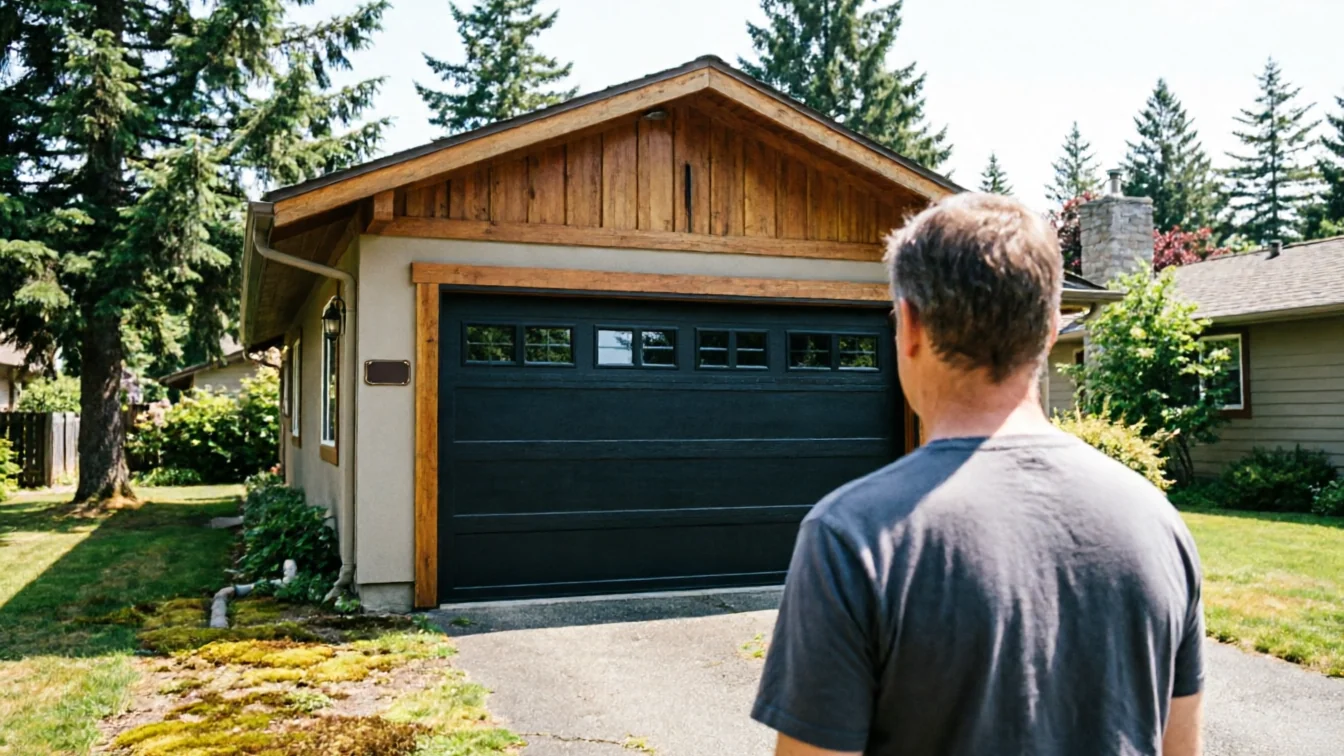
Wood jambs on older builds (closer to the 1964-1980 end of the range) swell with moisture in the wet months and shrink back in summer, which works the weatherstripping loose at the corners even on a door that otherwise runs fine. Steel doors from the 1990s stock hold their shape better but the factory seal still ages out on the same timeline as everything else built then.
We see the same pattern whether a house sits on this side of town or out toward Bull Mountain, four miles northwest - the draught shows up where the seal meets the slab, and it gets worse every winter it's ignored. One limitation worth saying plainly: we don't do cosmetic weatherstripping touch-ups on doors that are structurally failing elsewhere. If the track is bent or the panel is rusted through, a new seal just delays the real job.
What we find
The Cost of This Job
We don't have a flat number to quote here, and we're not going to make one up. What we can tell you is what drives the decision. Tualatin's median household income runs a bit over six figures, and across the service area roughly two in three households own rather than rent (66,619 owner-occupied houses out of about 130,959 total households) - which matters because a seal-and-threshold repair is the kind of job an owner chooses to do before it becomes an emergency, not after.
The job scales with how much of the perimeter needs new material: bottom seal alone is the smallest job, bottom seal plus jamb weatherstripping is more, and replacing a rotted threshold on top of that is the most involved of the three. A house built in the 1964-1980 range with original wood trim usually needs more material than a 1990s build with steel jambs.
If your door is drafting badly enough that you're feeling it from the house side, that's usually the seal and threshold together, not just the bottom seal. We'll tell you straight if it's a quick fix or if the door itself is past the point where sealing it is worth the money.
How we work
The Situation
If you're dealing with a cold floor near the garage wall, a line of water under the door after rain, or a gap you can see daylight through, you're looking at a seal problem that's common on houses built in the Tualatin area's main construction window. It's not a sign anything was built wrong - it's thirty-plus years of a cold moderate climate doing what it does to rubber and vinyl.
We work across the areas near Tualatin, including Sherwood and Bull Mountain a few miles out, Metzger and Garden Home-Whitford closer in, and further out toward Milwaukie, Canby, and Newberg. The repair itself is usually straightforward once we're looking at the door - what takes the time is matching the seal profile to the track type your builder used, since that varied more between the 1960s and 2000s than people expect.
Get it looked at before the wet season really sets in. A door that's drafting in October is usually fine with new weatherstripping. The same door ignored through a few winters starts pulling moisture into the track hardware, and that's a different, more expensive call.
Talk to a local pro
Garage door trouble in Tualatin?
Same-day service with honest, upfront quotes.