Built-to-life hardware
None of that is bad gear - it's just gear that was built to a service life, and a door hung in 1997 is closing in on three decades of cycles.
Sherwood, Tualatin
Garage door maintenance in Sherwood, OR for homes built mostly in 1997, covering torsion springs, openers, and rollers. Serviced from Tualatin, 4 miles away.
Watch-outs
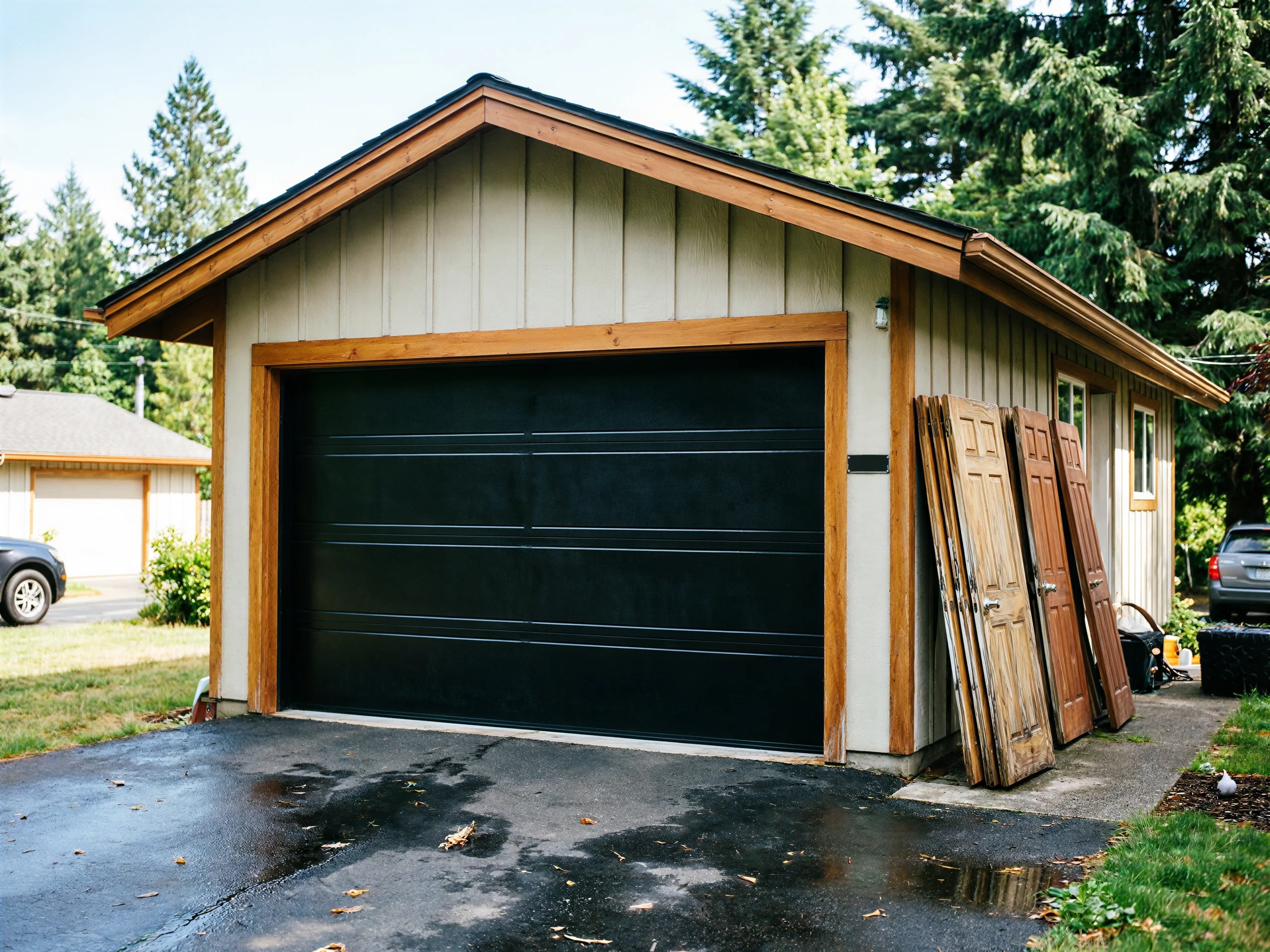
Most of Sherwood went up around 1997, which puts the bulk of the town's garage doors into a pretty narrow window of hardware. That's steel sectional doors on galvanized torsion springs, nylon or steel rollers riding painted track, and chain or belt-drive openers from the same build wave.
None of that is bad gear - it's just gear that was built to a service life, and a door hung in 1997 is closing in on three decades of cycles.
The complication isn't one bad part, it's that whole blocks of the same subdivision installed the same hardware in the same few years, so when one spring on a street starts going soft from fatigue, the identical spring two doors down usually isn't far behind.
Across the wider service area the housing stock runs from 1964 clear through 2006, but Sherwood itself sits later and tighter than that average, which means the fixes that make sense here - lubrication intervals, spring replacement timing - don't always match what a 1970s-built neighborhood needs. We work from Tualatin, about 4 miles off, so this isn't a different crew with different habits, just the same maintenance work applied to a different decade of hardware.
Symptoms
The door that used to glide now hesitates partway up, or it reverses on the way down for no obvious reason. Sometimes it's a grinding or popping noise right as the springs take the weight of the door at the bottom of travel.
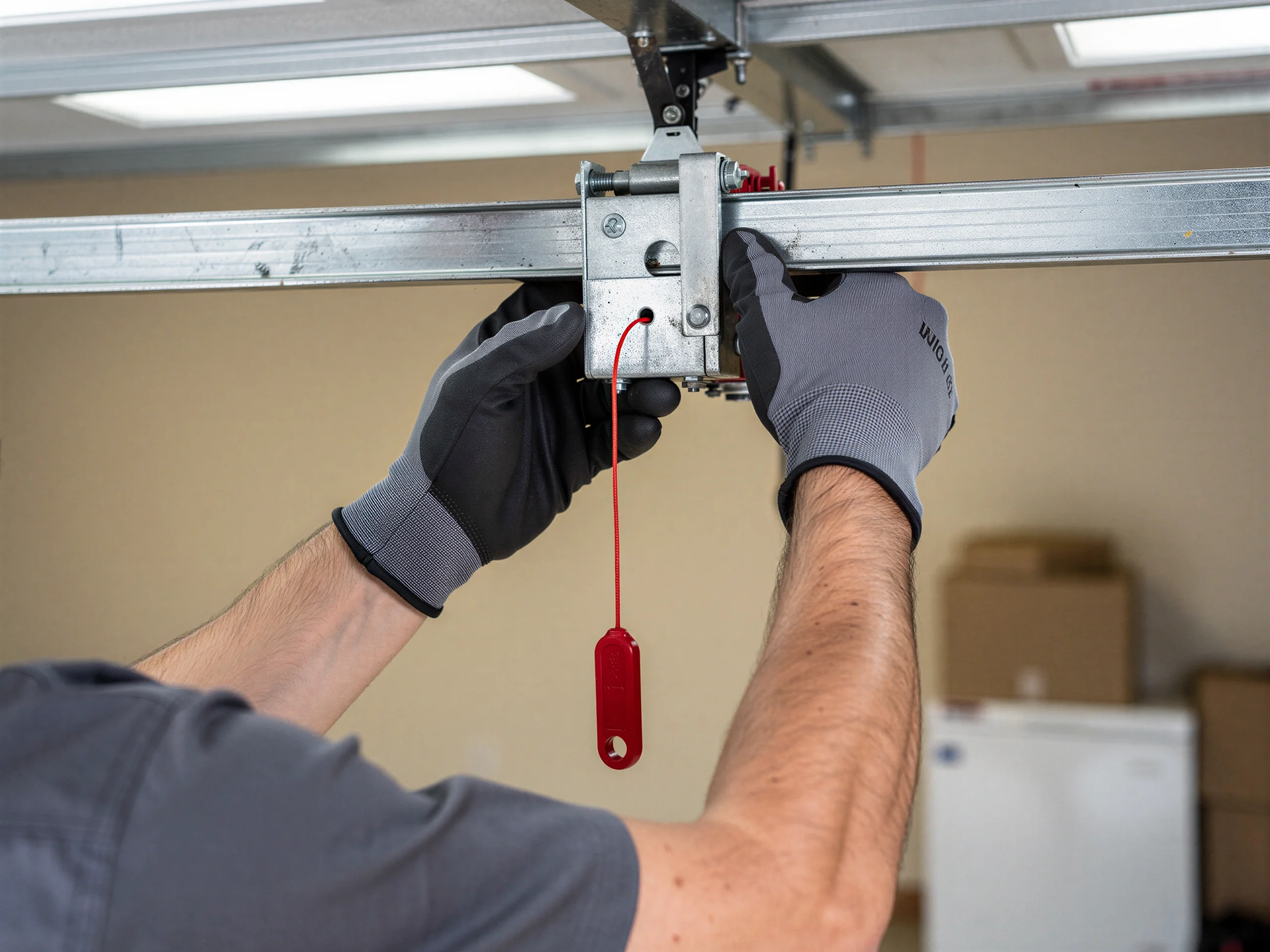
On the opener side, the most common complaint is a unit that runs louder than it used to, or one that strains and slows before it finishes the cycle - a sign the springs have lost tension and the motor is doing work it was never sized to do alone.
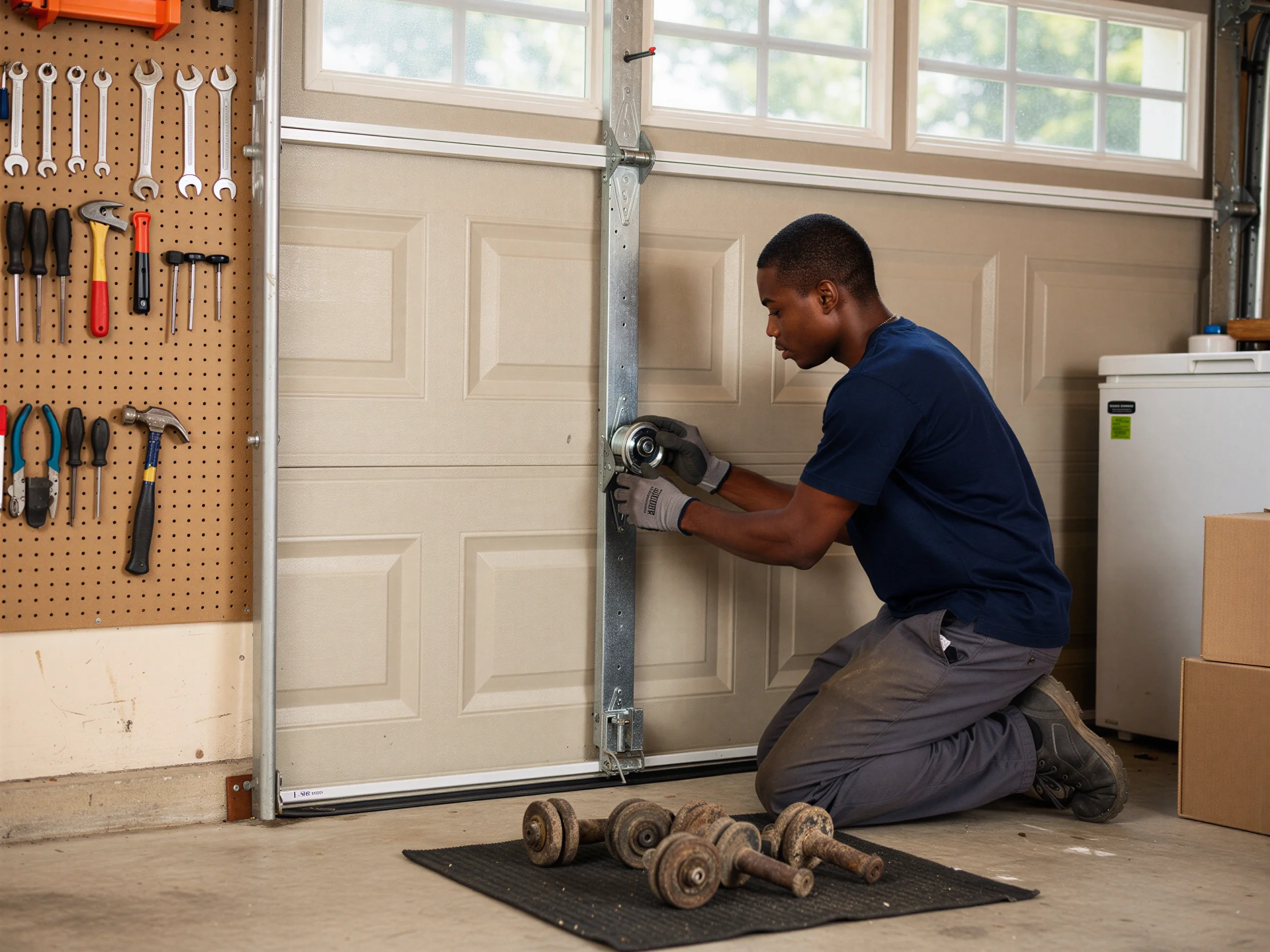
Rollers nearing the end of their life show up as a shudder or a rough rattle as each one hits a track section, rather than a smooth roll.
None of these are emergencies on their own, and most Sherwood homeowners live with a slightly noisier door for weeks before calling anyone, but each of these symptoms points to a part that's past its working life rather than one that needs a quick fix and a return to normal.
Local causes
The region sits in a cold-moderate climate band, which means the springs and hinges on a Sherwood door go through repeated damp mornings and cold snaps rather than one or two extreme events a year. That cycle - cool and wet, then dry, then cool and wet again - is what strips factory lubricant off torsion springs faster than a dry climate would, and it's what starts surface rust on galvanized coil long before the spring actually fails. Add in that so much of the town's hardware installed in the same few years around 1997, and you get a pattern where several houses on the same street develop the identical rust-and-fatigue combination within a season or two of each other. It isn't bad luck or a bad batch - it's the same metal, the same age, and the same weather doing the same thing to all of it. Across the broader service area median household income runs near $101,953 on about 130,959 households, and Sherwood's own household count is a fraction of that at roughly 7,017 - smaller, but no less exposed to the same weather pattern driving spring and track wear.
DIY or pro
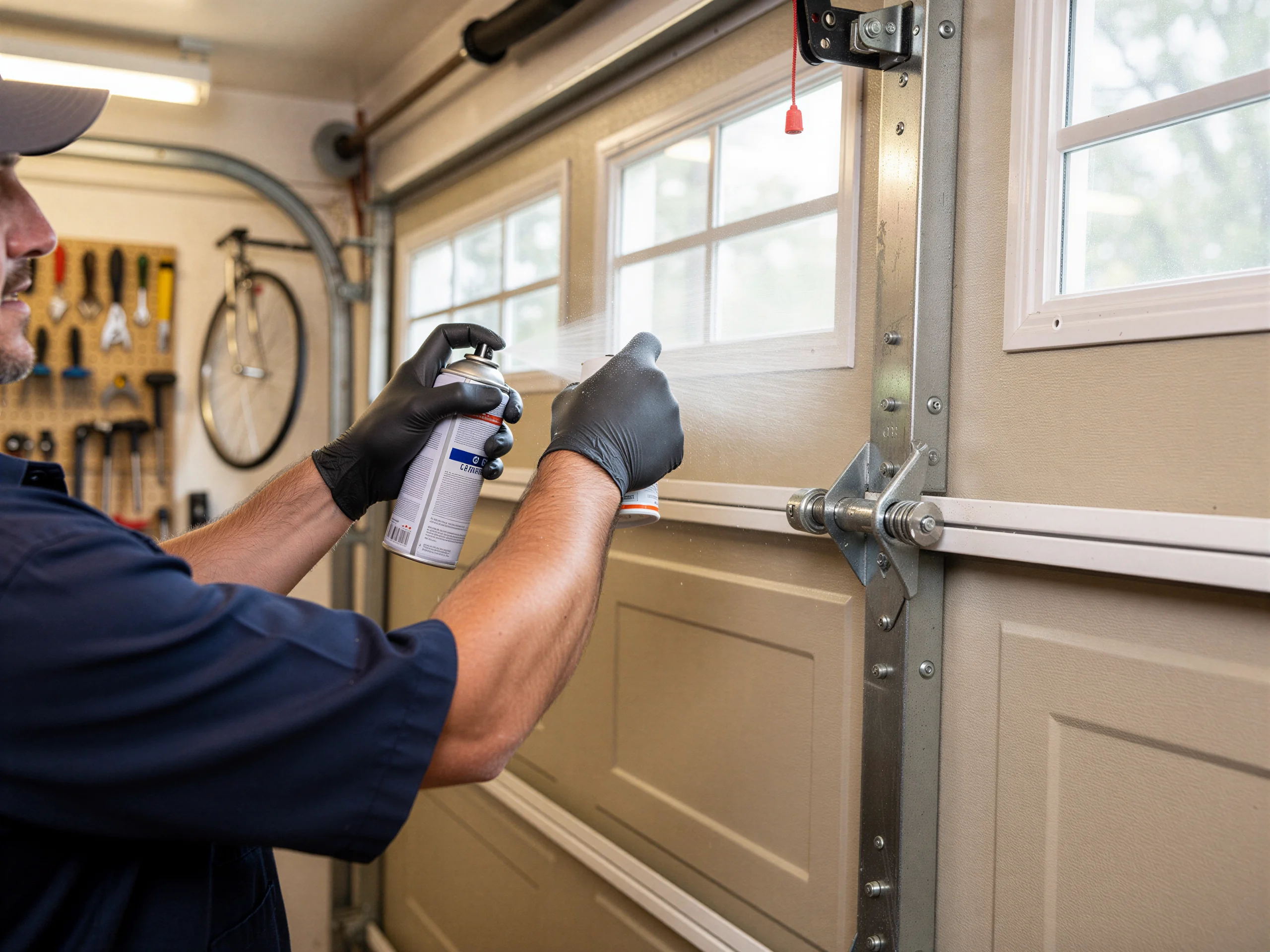
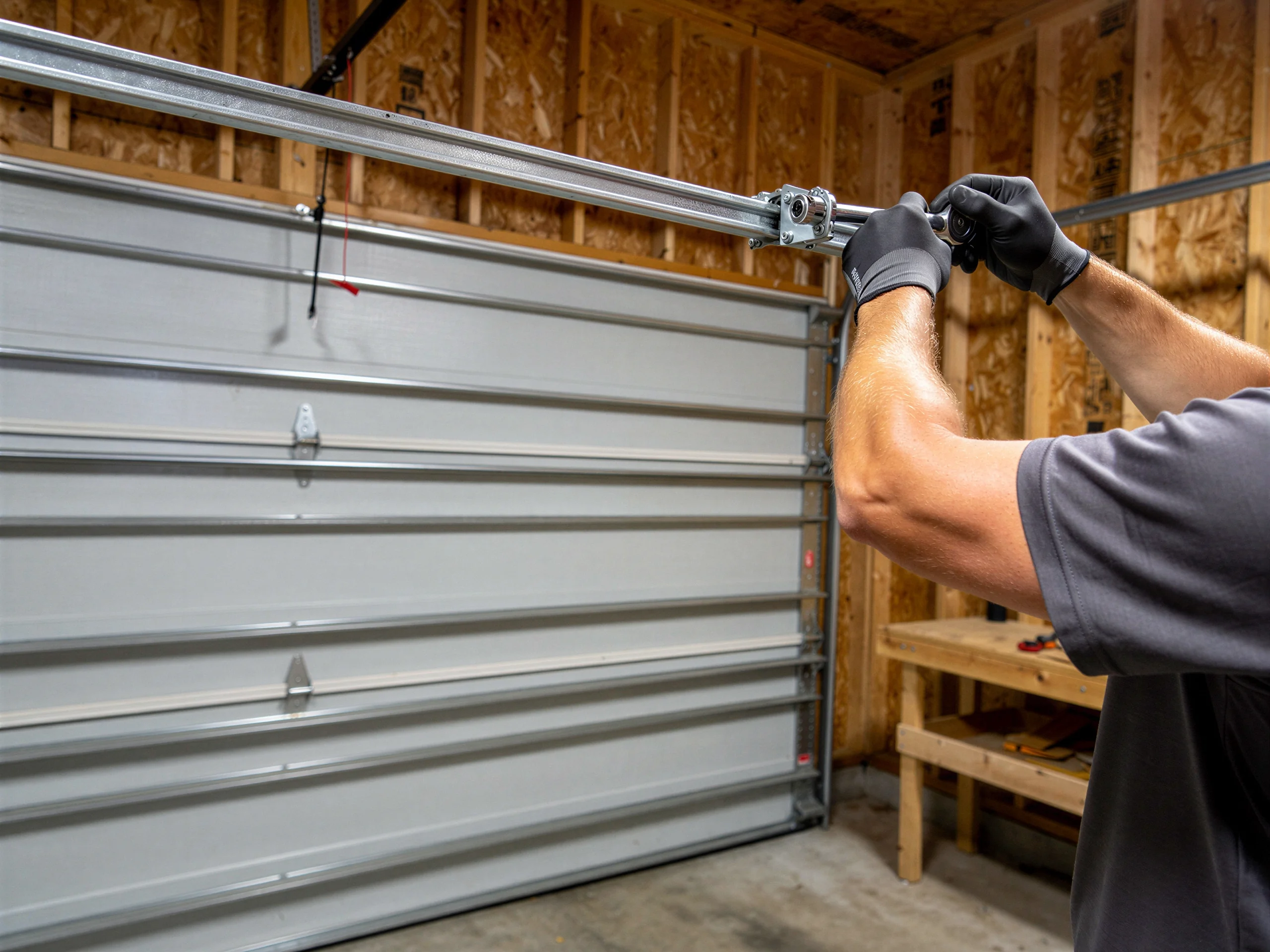
A homeowner can do real maintenance without calling anyone: wipe down and lubricate the rollers and hinges twice a year with a garage-door-specific lubricant, not household oil, which attracts grit.
Check that the track is still bolted tight and free of dents, and listen for new noise - a door that was quiet last month and isn't now is telling you something before it fails outright. Test the auto-reverse by laying a block under the door and running it down; it should stop and reverse on contact.
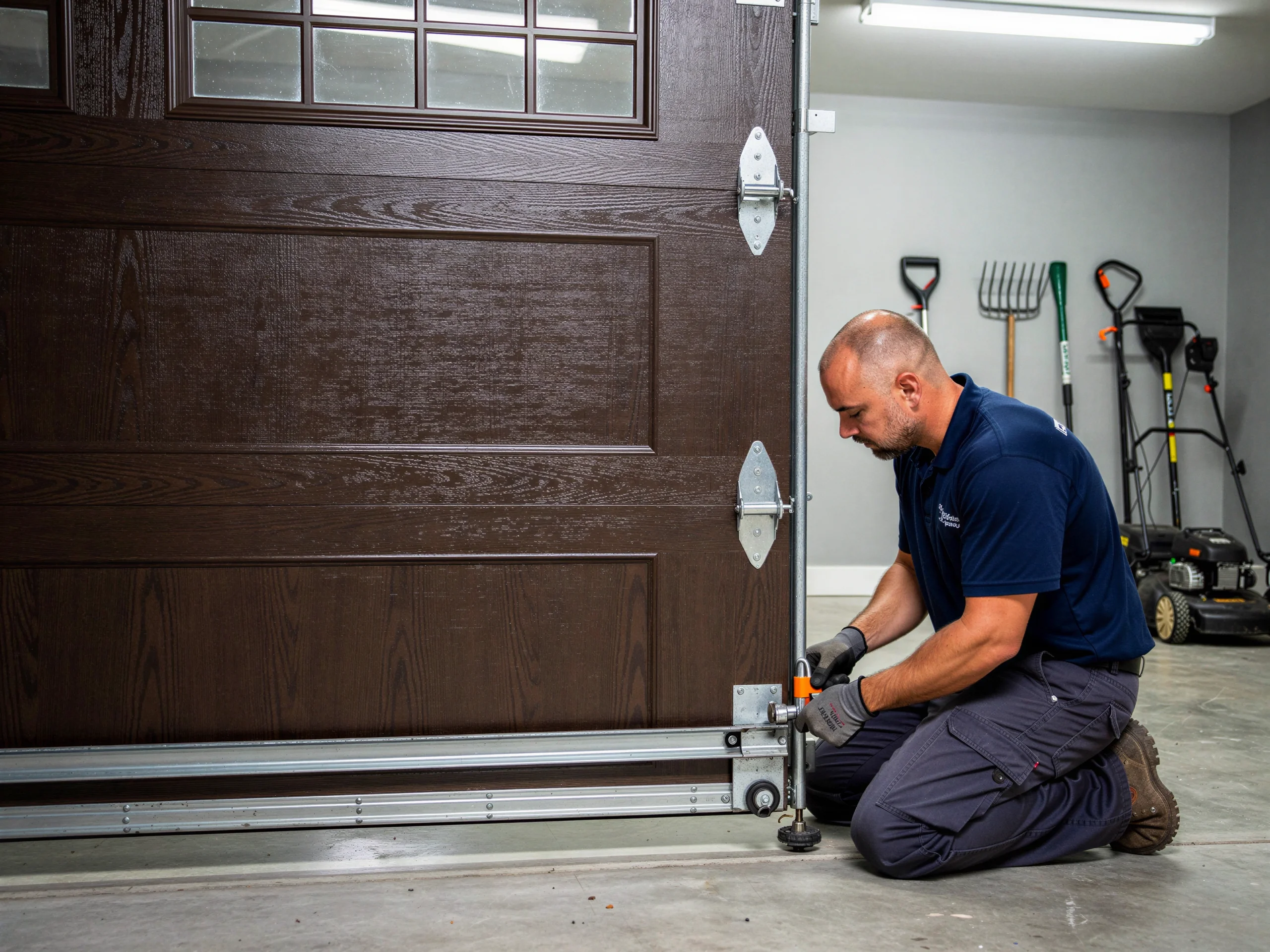
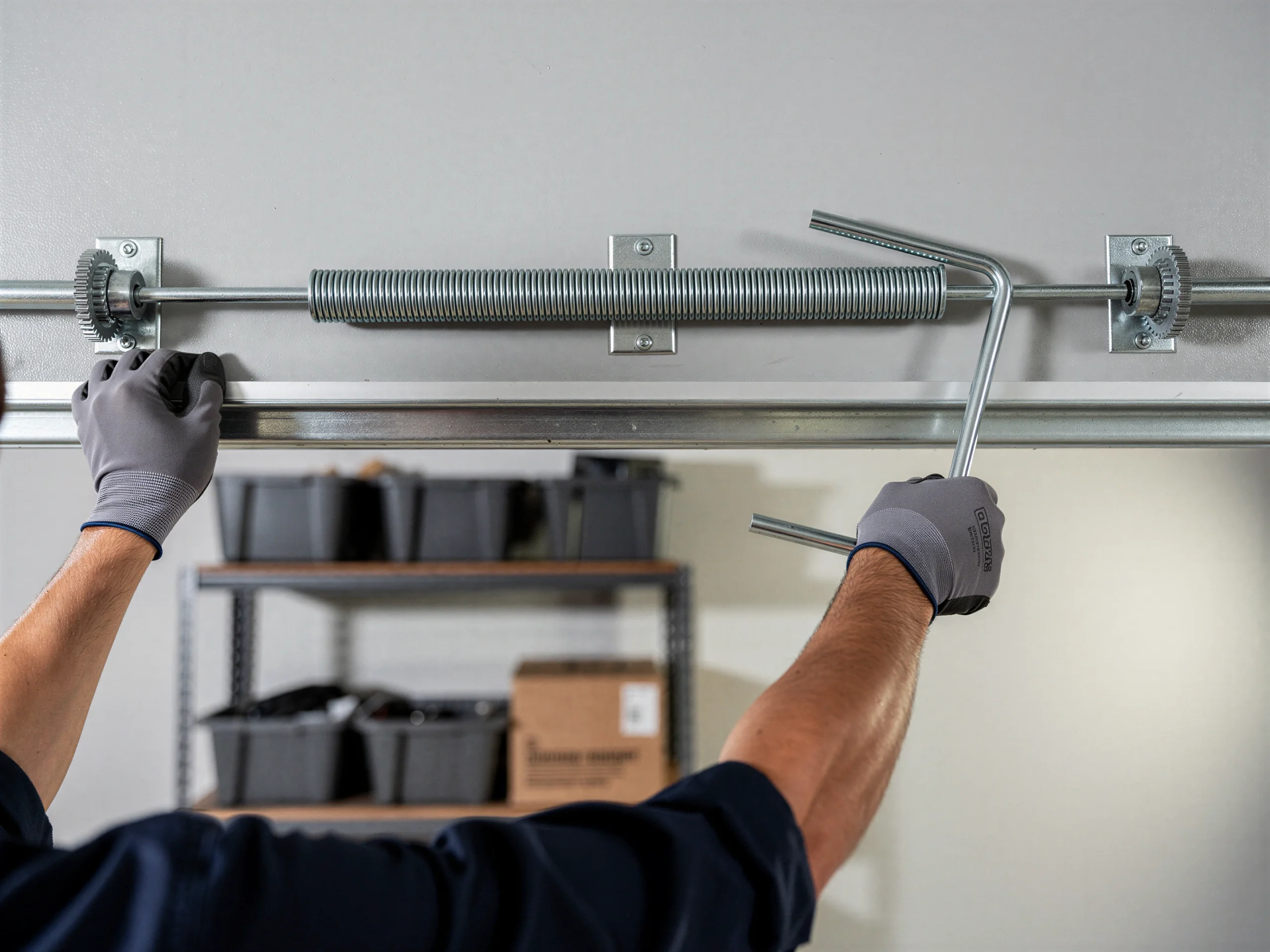
What we don't recommend touching yourself is the torsion spring itself. Those springs hold enough stored tension to cause a serious injury if they're loosened or replaced without the right bars and clamps, and on a door built in the 1997 wave, a spring that looks fine can be right at the end of its cycle count.
If your door is at that stage, replacing both springs as a pair is usually the better call than patching one side and leaving the other to fail a few months later.
Questions
Torsion springs are rated by cycle count rather than age, but a spring installed when a Sherwood house was built around 1997 has likely seen enough open-close cycles by now to be near the end of its rated life. Noise, visible gaps in the coil, or a door that feels heavier than it used to are the signs worth acting on.
No, we work out of Tualatin, about 4 miles away, and travel in to handle maintenance calls. There's no local branch here, just the same crew coming from Tualatin to do the work.
Usually it's the springs, not the motor. As torsion springs lose tension with age, the opener has to carry more of the door's weight itself, which shows up as strain, noise, or slower cycles. Replacing the springs typically fixes it faster than replacing the opener.
On a double-spring setup, we don't recommend it. Both springs are usually installed at the same time and see the same cycles, so if one has failed from age, the other is close behind it. Replacing them as a pair avoids a second service call a few months later.
Explore more
Ready when you are
Tualatin Garage Door Pros repairs and installs garage doors, springs and openers in Tualatin, OR and the surrounding area.