Heavier lift symptoms
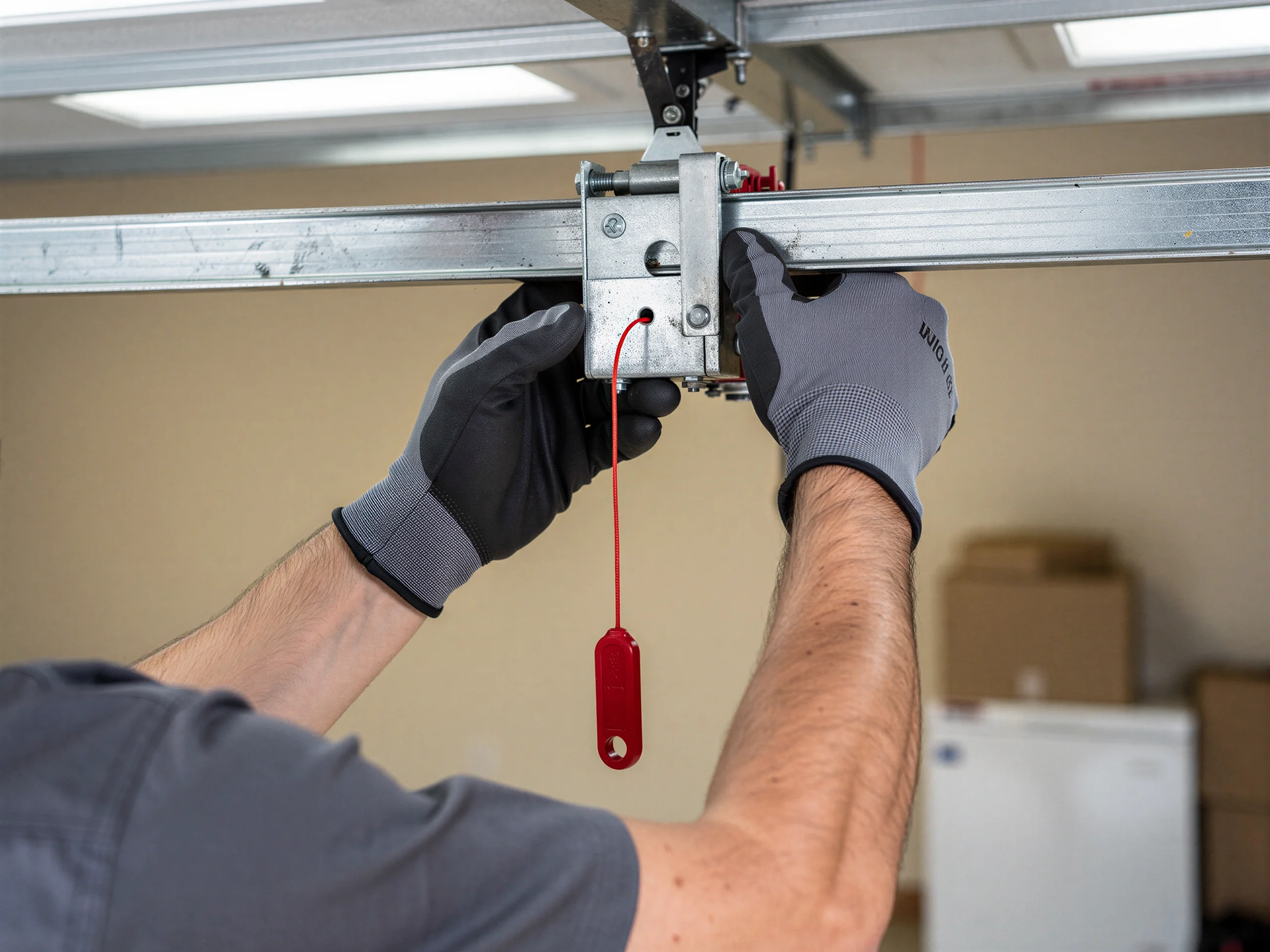
A door that age is on its second or third opener by now, and the symptom we hear most from this stretch is a door that reverses right after it starts closing, or one that's gotten noticeably heavier to lift by hand.
Stafford, Tualatin
Garage door repair for Stafford, OR's roughly 611 households, served from Tualatin 5 miles away. We know the 1976-era hardware common on this side of the hill.
Booking
Serving Tualatin, OR
Stafford isn't a big place - about 611 households sit on this side of the hill, which means we're not running a call center here, we're running a truck out from Tualatin, 5 miles down the road. Call and tell us what the door is doing: won't open, won't close, makes a noise, moves crooked. We'll ask the year the house was built if you know it, because on a property from the 1970s the fix is often different from one built in the 2000s. We schedule the visit, bring the parts we expect to need based on what you describe, and adjust once we're looking at the actual spring or track. We don't quote a same-day window for Stafford specifically - we travel to get there, so we're upfront that the exact time depends on the day's route out from Tualatin.
Symptoms
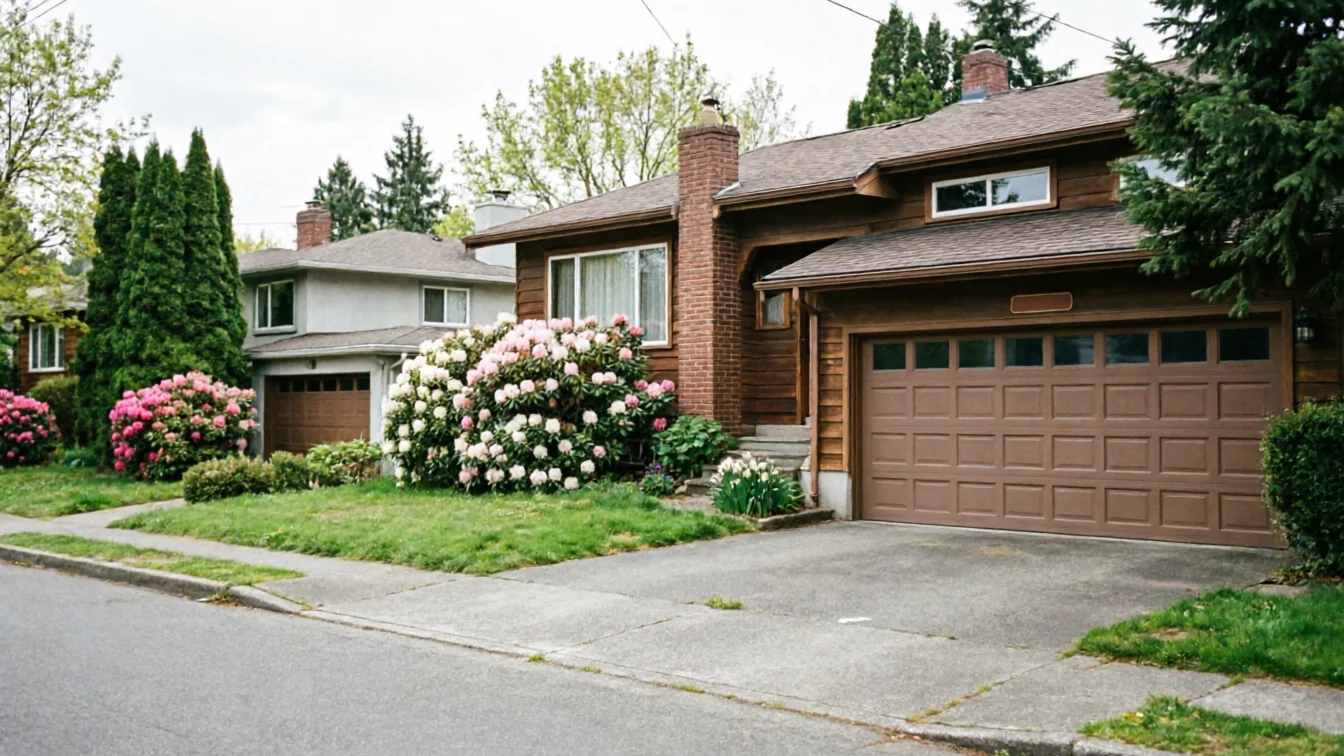
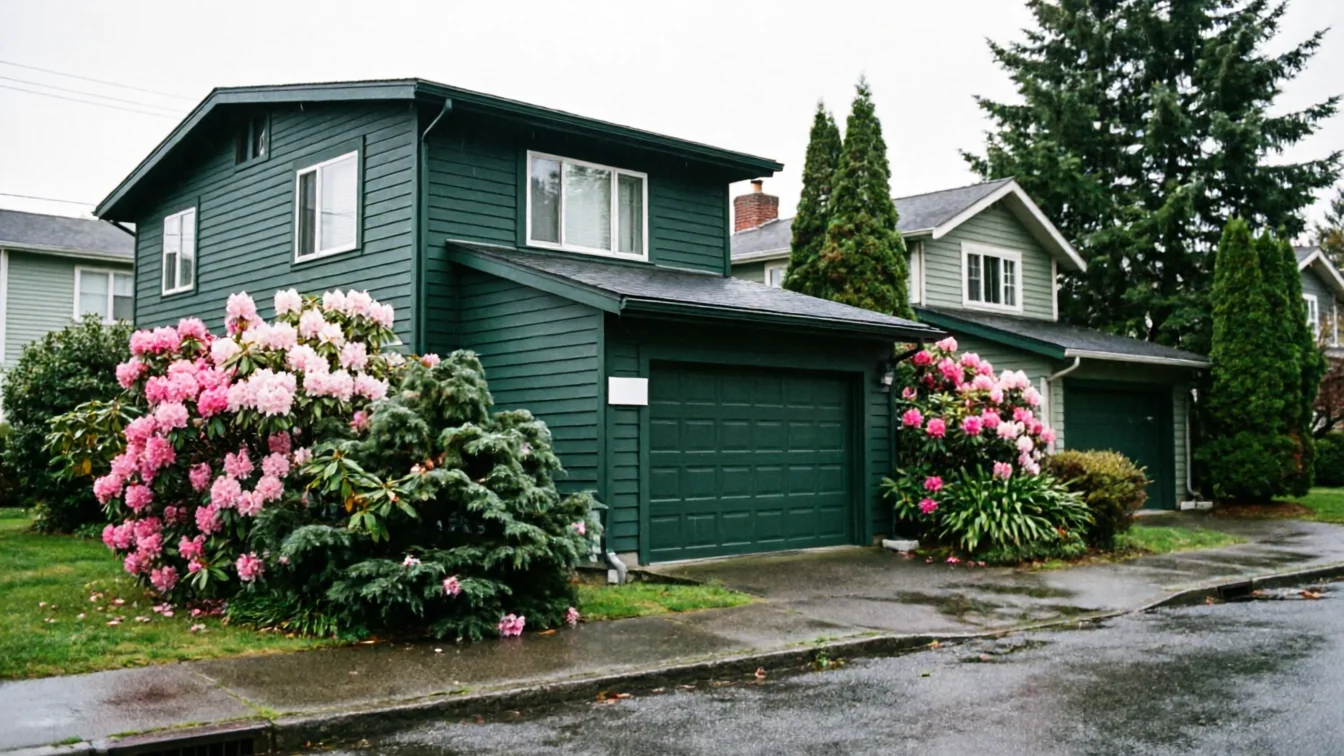
The typical Stafford house dates to around 1976, putting it right in the middle of the 1964-2006 range we see across this service area, but closer to the older end than the newer subdivisions further out.
A door that age is on its second or third opener by now, and the symptom we hear most from this stretch is a door that reverses right after it starts closing, or one that's gotten noticeably heavier to lift by hand.
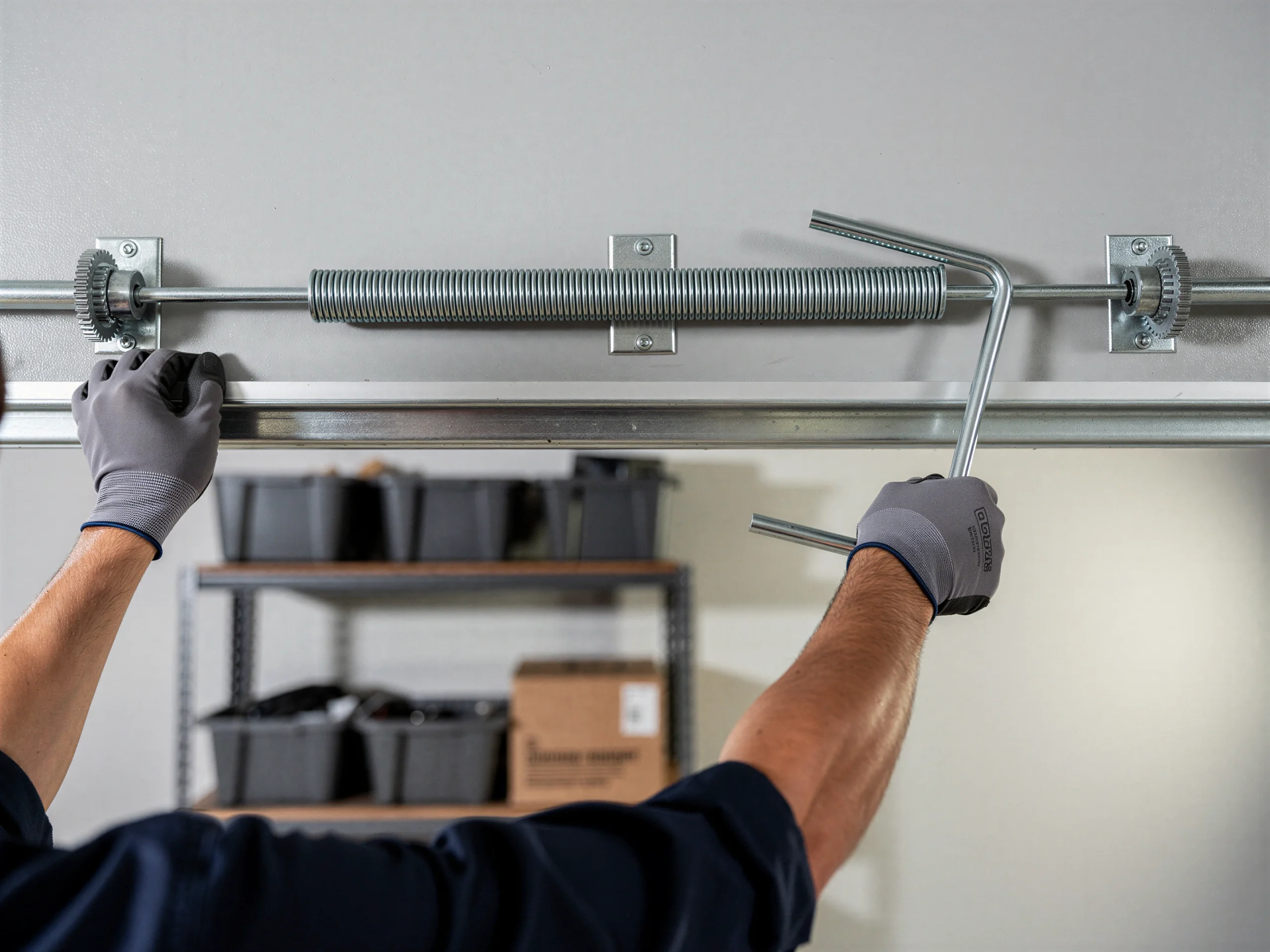
That's usually the spring giving out, not the opener. On a house built in the mid-1970s, the torsion spring has had decades of cycles, and if it was never replaced, it's overdue.
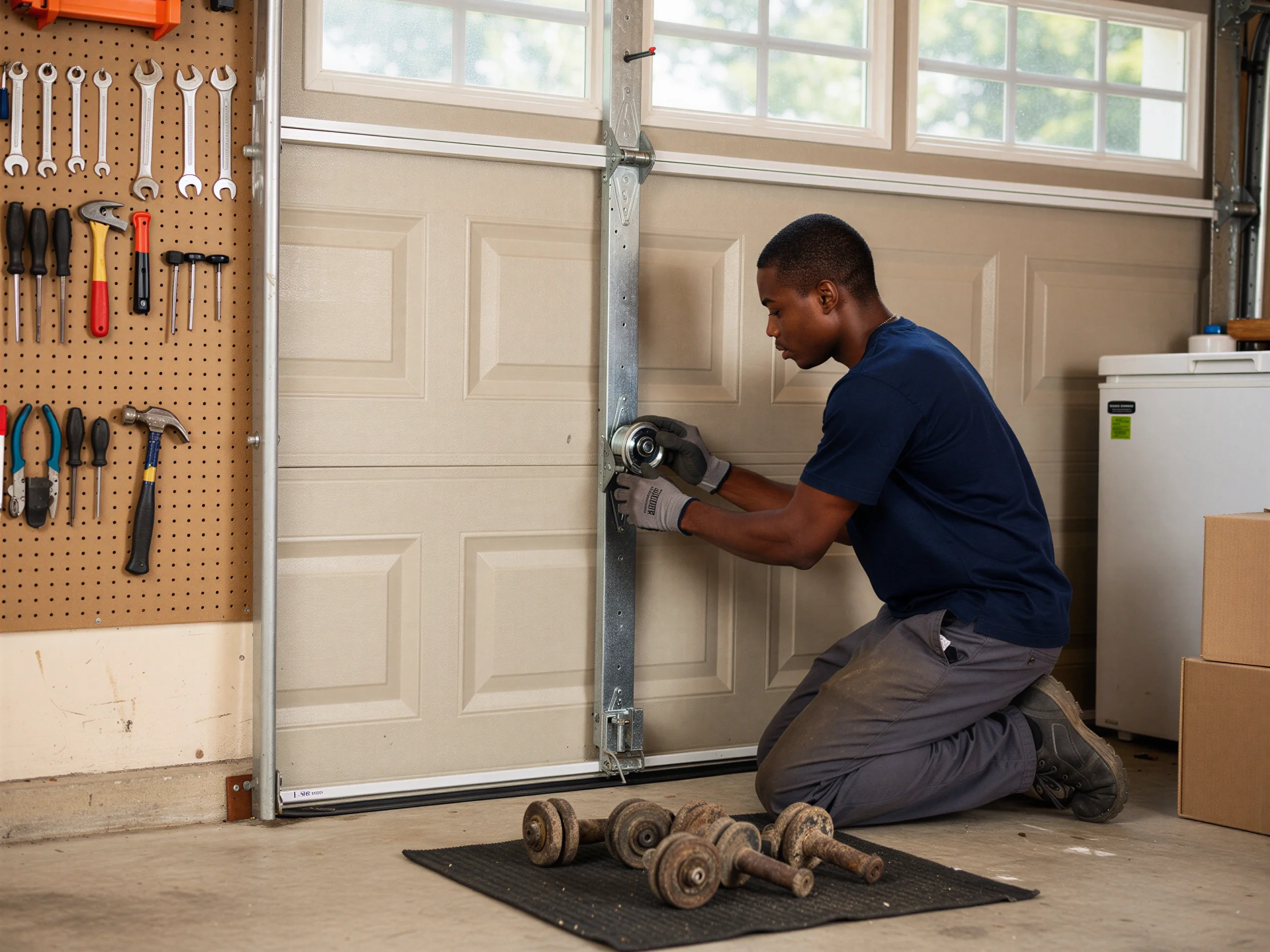
A grinding or popping sound when the door moves is the rollers, and on original hardware from that era they're often the steel kind that wear loud long before they fail outright.
On the truck
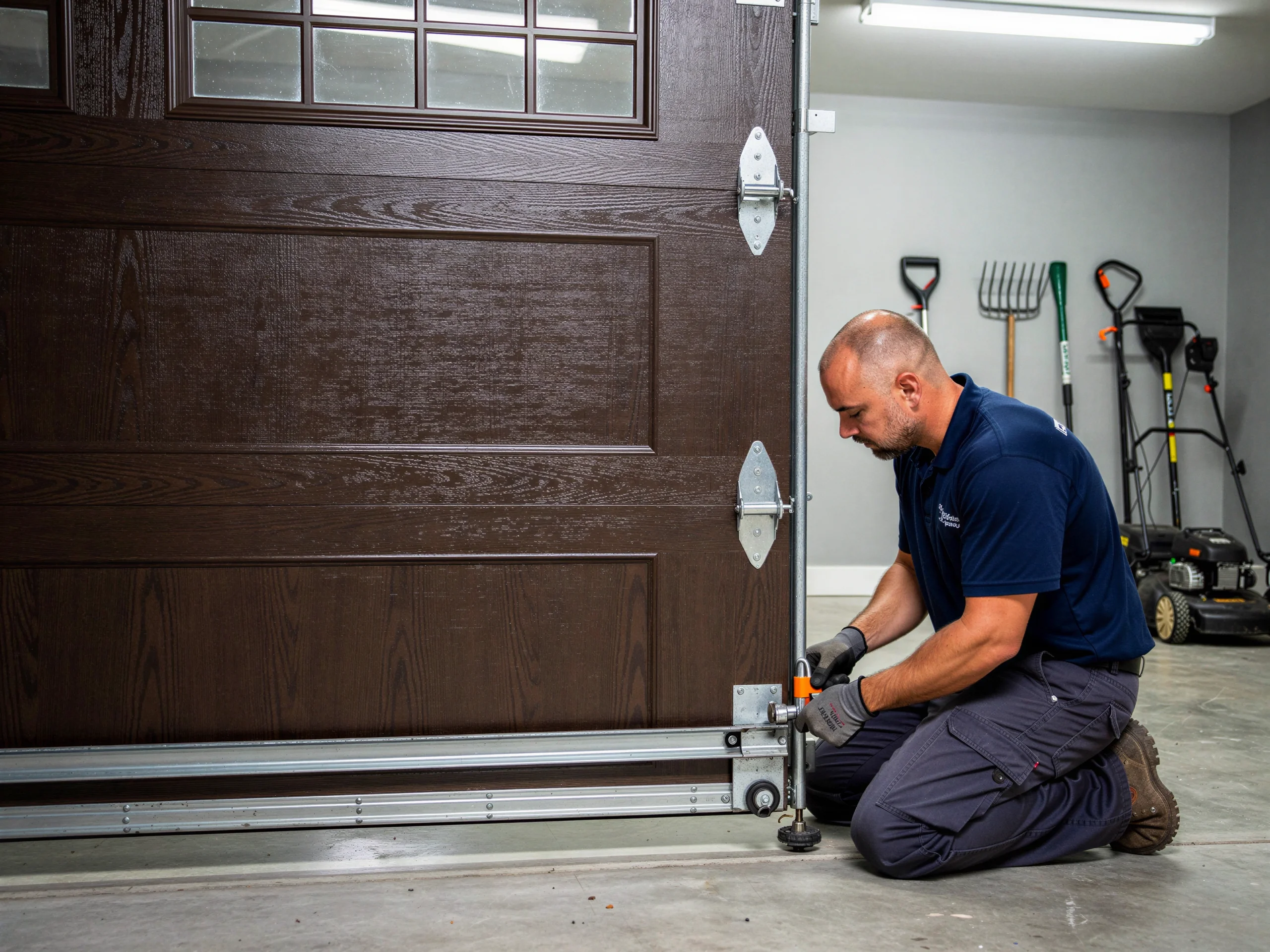
For a 1976-built door we carry standard torsion springs sized for a single or double door, plus the steel rollers and lift cables that era commonly used. Openers from houses built in the 1960s through the 1990s across this area tend to run older chain-drive units, and we stock the belts, gears, and logic boards that fail on units from that window. What we don't keep on the truck is anything custom - a wood-panel door with a discontinued profile, or hardware for a replacement door installed in the last few years that uses a proprietary bracket. If your door's newer or was swapped out recently, we may need to order the part, and we'll tell you that cost and wait up front instead of guessing at the job.
Our process
We start by cycling the door a few times to see where it binds or where the opener struggles, then check the spring tension, the track alignment, and the cable wear.
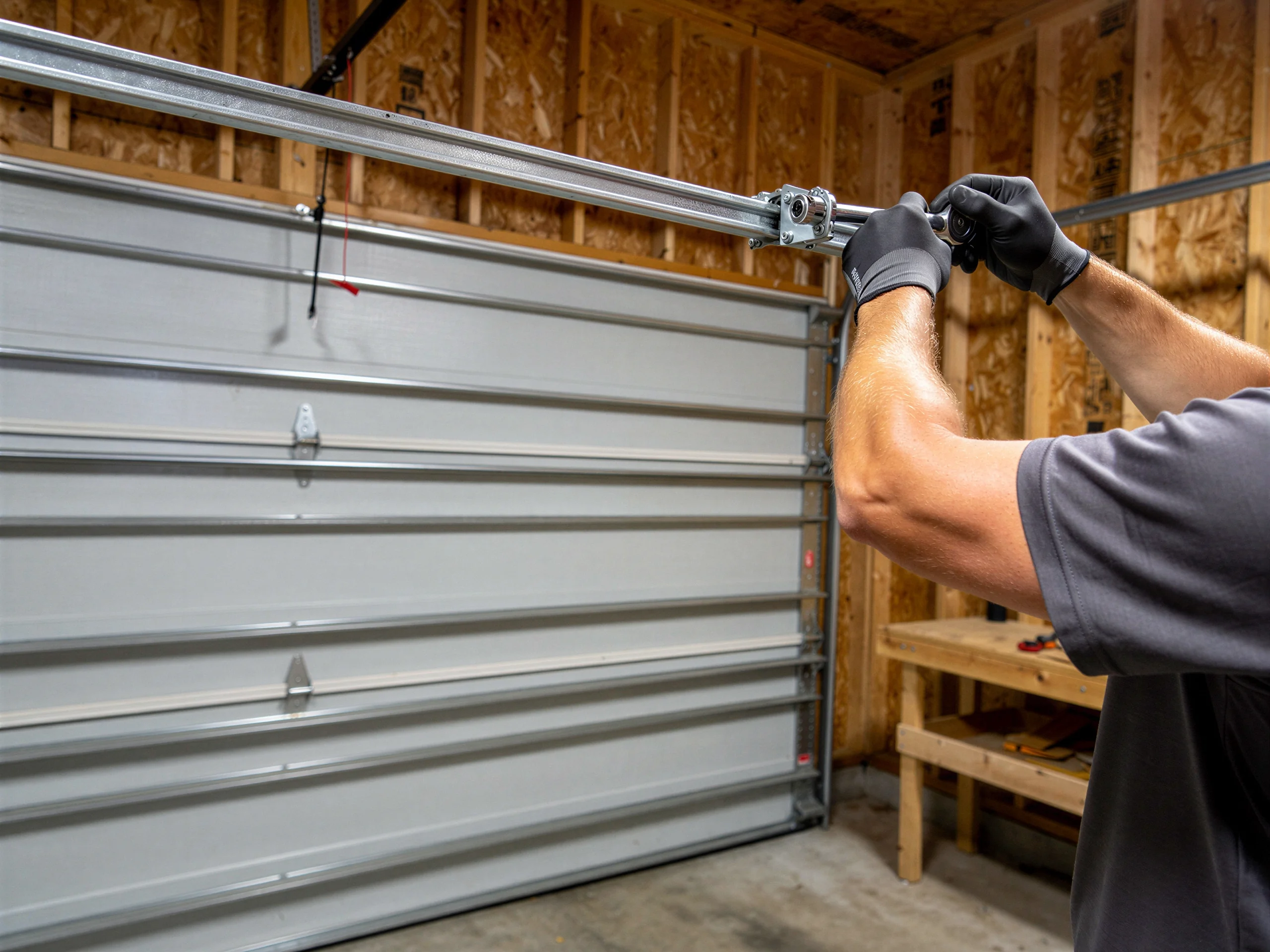
On a house this age, the track brackets are often the original lag bolts into jamb framing that's shifted slightly over fifty years, so part of the fix is sometimes re-securing the track before touching the spring at all.
If it's a spring job, we match the wire size and wind to the door weight rather than guessing off a chart, because an undersized spring on a double door just fails again in a year or two.
We test balance by hand after the repair - a properly sprung door should hold position at waist height on its own. If it doesn't, we're not done.
DIY or pro
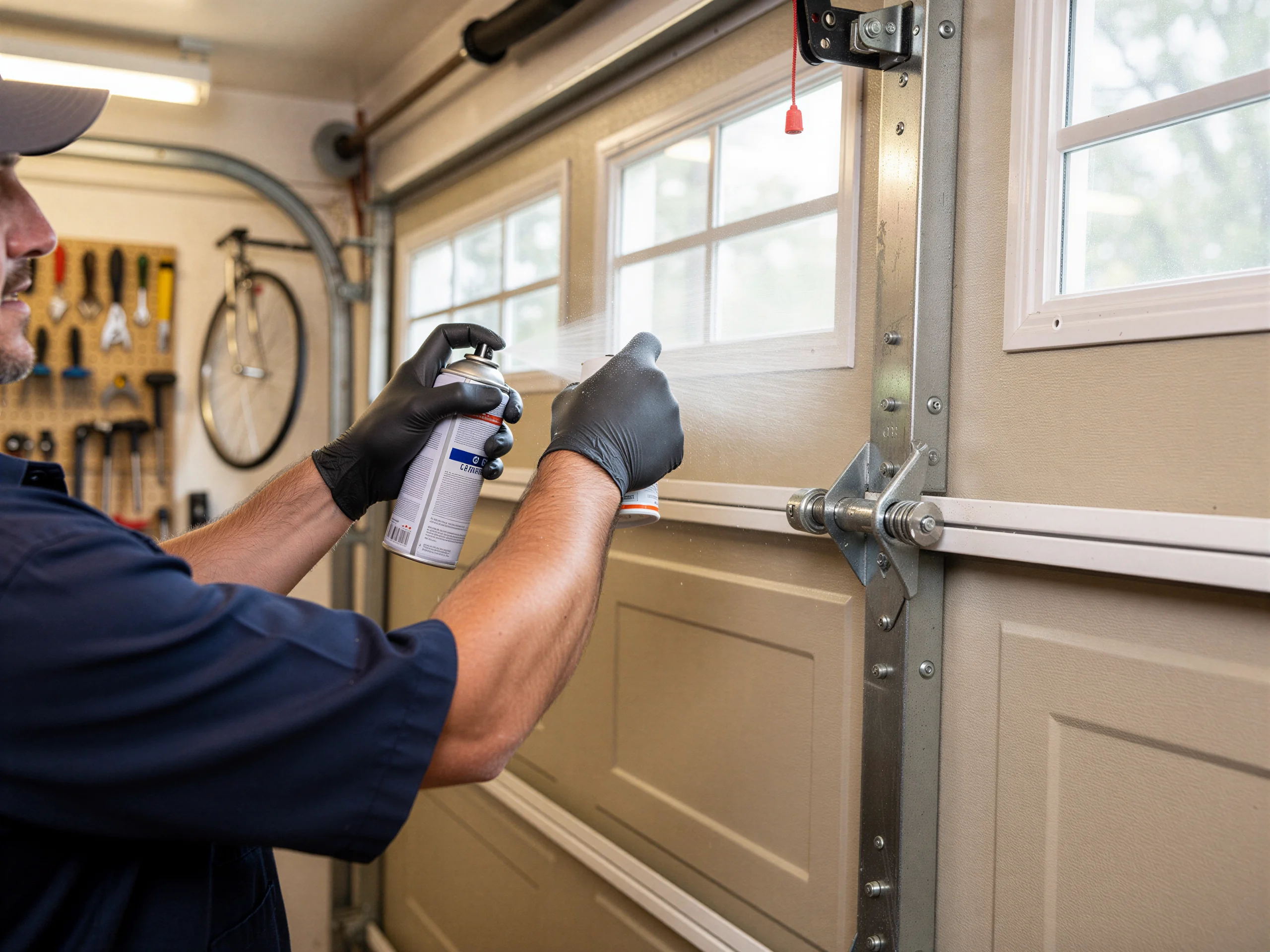
There's a few things worth checking before you call anyone. Rollers that just need lubricant, a sensor that's gotten knocked out of alignment at the bottom of the track, a remote battery - all fixable without tools you don't already own. What we don't recommend touching yourself is the torsion spring. It's under enough tension to cause real injury, and on an older house like most of what's in Stafford, the spring and the drum it winds around have usually both seen enough wear that doing it wrong doesn't just fail safely - it can come apart. If the door's binding on the track, check that nothing's been stacked against it in the garage before assuming it's a mechanical fault; we get called out for that more than people expect.
Local causes
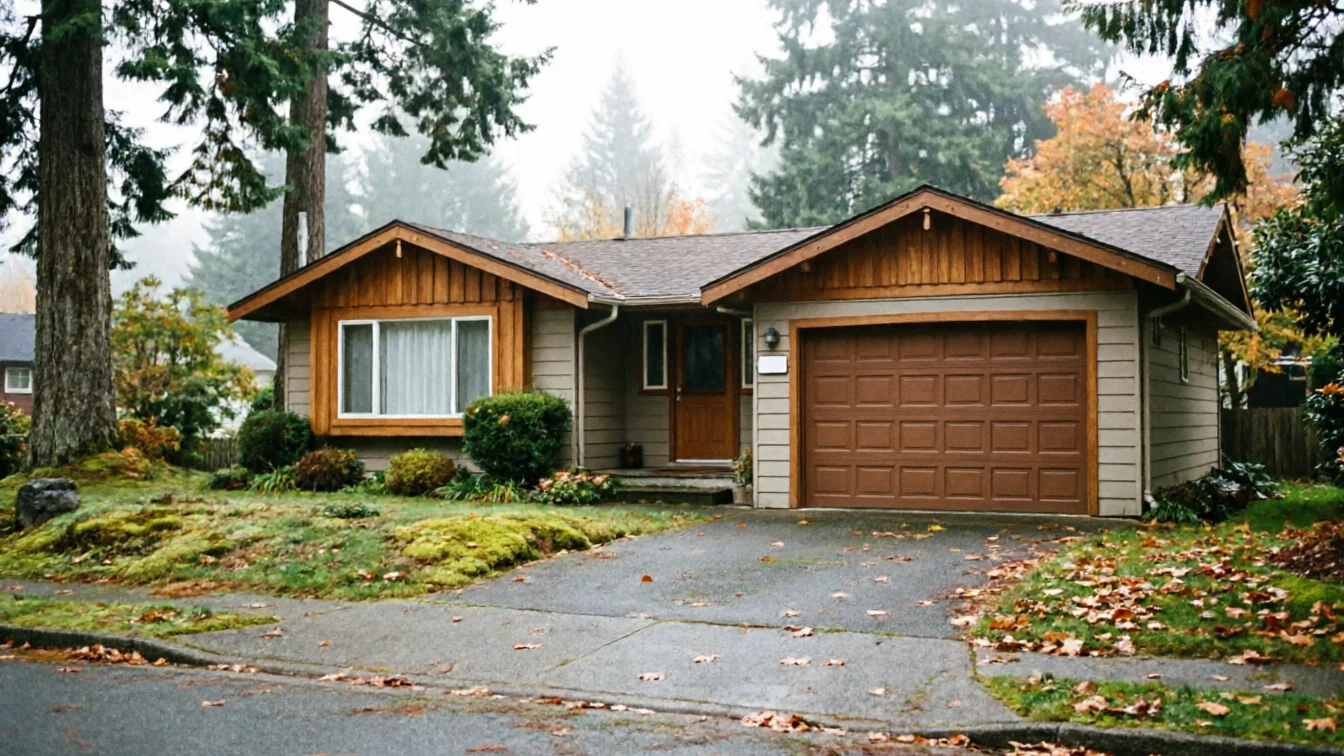
The area's climate runs cold-moderate, which doesn't bake door hardware the way a hot, dry climate would, but it does mean condensation and seasonal temperature swings work on steel springs and cables over decades. A door built in 1976, closer to the start of this area's 1964-2006 housing range, has had more winters to do that work than one from a 2000s subdivision further down the list. Median household income out here runs well above the wider service area's figure - about $182,372 against the broader area's roughly $101,953 - and what that tends to mean in practice is more owners replacing a door outright rather than patching it repeatedly, which is often the better call once a door's original hardware is this old.
Questions
No. We're based in Tualatin, about 5 miles away, and we drive out to Stafford for calls. There's no local depot here, just a truck that comes when you book.
On a house built around 1976, the torsion spring has likely done decades of cycles without replacement. As it weakens, the door gets harder to lift by hand and the opener strains more, sometimes reversing mid-close. That's a worn spring, not a broken opener.
Depends on the hardware and the door panel condition. If the track and frame are sound and it's just the spring or cable, repair makes sense. If the panels are dented or warped on a door this old, replacement often costs about the same over time and solves more at once.
Explore more
Ready when you are
Tualatin Garage Door Pros repairs and installs garage doors, springs and openers in Tualatin, OR and the surrounding area.