Uniform housing era
It also means the housing here tends to cluster around one building era rather than spanning decades, so the openers we pull out of Sherwood garages look a lot alike. That's useful.
Sherwood, Tualatin
Opener repair for Sherwood's 1990s-era homes, served from Tualatin 4 miles away. Chain-drive wear, aging circuit boards, and cold-weather sensor faults we see most.
Watch-outs
Sherwood has about 7,017 households, which is a smaller, tighter market than the rest of the service area. That matters for opener work in a specific way: a town this size doesn't generate the call volume to justify a truck stocked for every opener model ever sold, so when we head out from Tualatin - a 4-mile drive - we're usually calling ahead to confirm the brand and the symptom before we load parts.
It also means the housing here tends to cluster around one building era rather than spanning decades, so the openers we pull out of Sherwood garages look a lot alike. That's useful.
It means we can usually guess the failure before we're in the driveway, but it also means a lot of these units are aging out on roughly the same schedule, which can turn into a run of similar calls in the same season.
The complication isn't access or distance. It's that a neighborhood built in a tight window ages as a unit - when one logic board starts failing, the one three houses down usually isn't far behind.
Symptoms
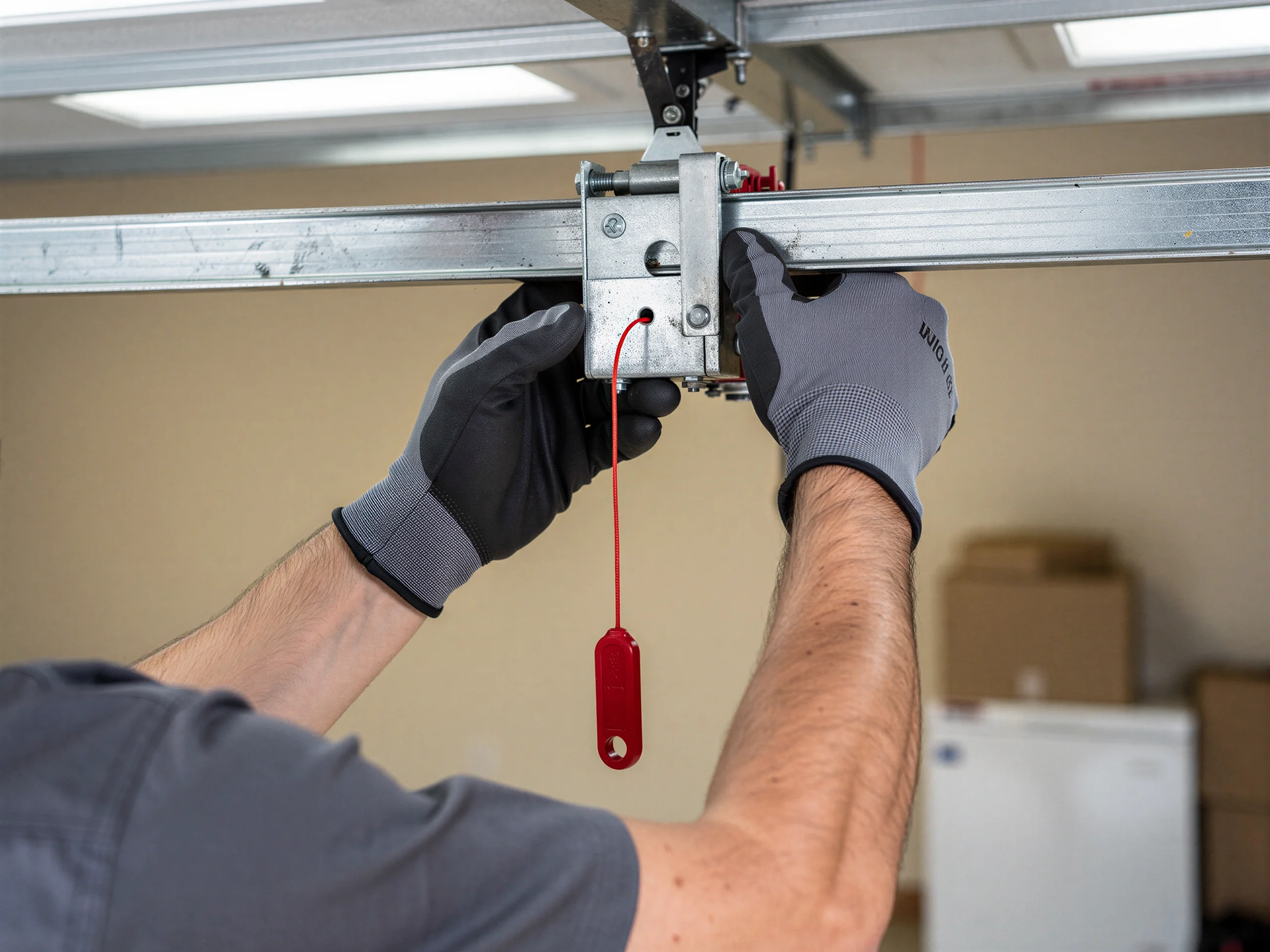
The calls we get from Sherwood cluster around a few patterns. The opener runs but the door won't fully close, stopping short and reversing - usually a safety sensor that's drifted out of alignment rather than anything wrong with the motor.
The remote works intermittently, or only from inside the garage, which points to a weakening circuit board rather than a dead battery. And then there's the opener that hums but doesn't move the door at all, which on the chain-and-belt units common in homes from this era usually means a worn drive gear or a stripped sprocket, not a failed motor.
Less common but still something we see: the wall console works but the remote doesn't, or vice versa, which tells you the fault is in the receiver board, not the mechanism. None of these are dramatic failures.
They're wear patterns that show up on a predictable timeline once an opener crosses a certain age, and Sherwood's housing stock is now at that age across a lot of addresses at once.
Local causes
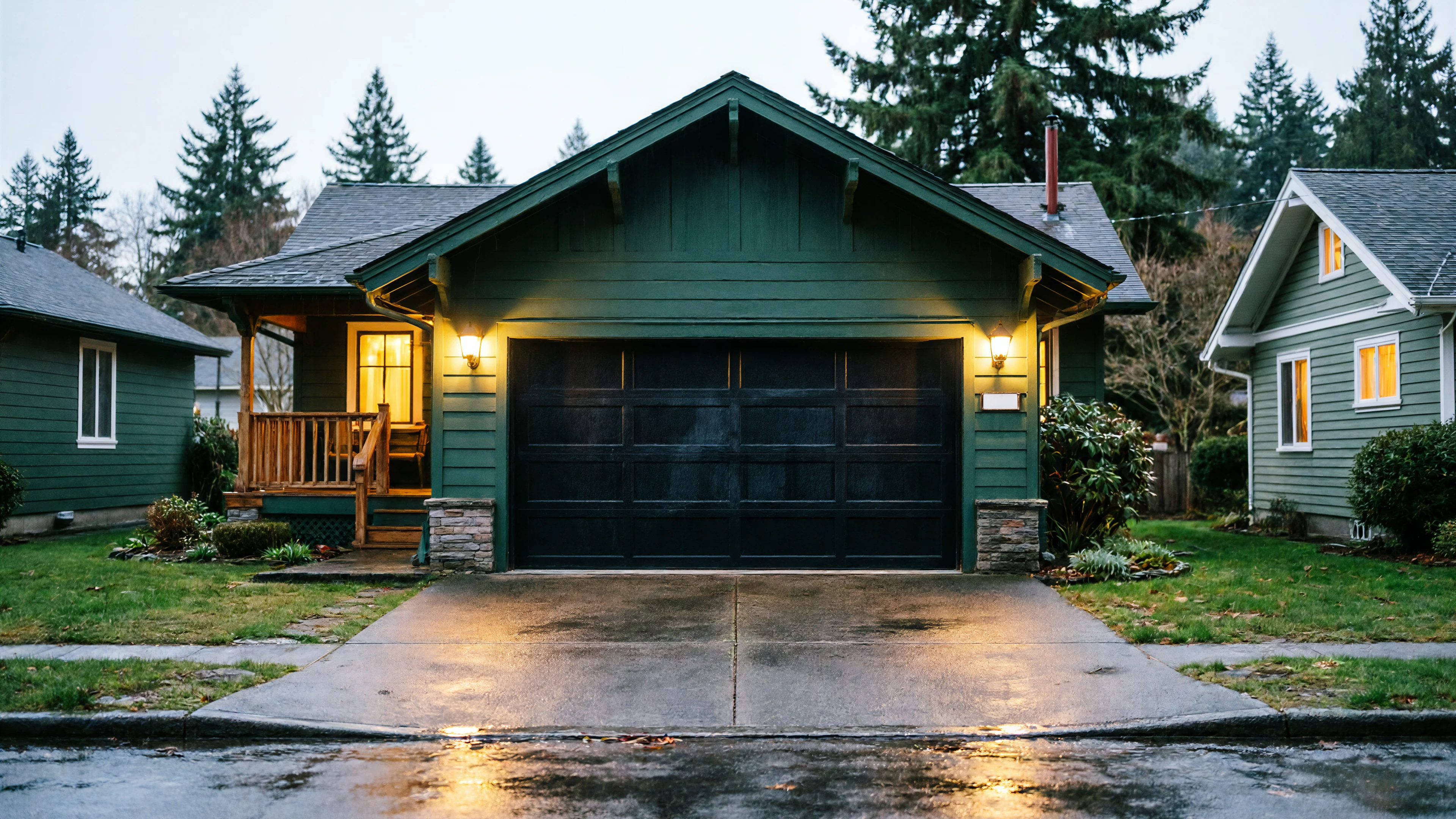
Sherwood's housing largely went up around 1997, give or take a few years on either side, which puts a lot of original garage door openers at 25 to 30 years old right now. That's past the realistic service life for the circuit boards and drive components in most consumer-grade units sold in that window, even ones that were well installed. Owners who've never touched the opener since move-in are often running the factory-original unit, and it's reaching the point where failure isn't a question of if.
The moderate cold swings in this part of the Northwest add to it. Repeated temperature changes make plastic gears and belt materials brittle faster than a mild, stable climate would, and they can throw safety sensor alignment off by a fraction of an inch - enough to trigger false reversals on a door that's otherwise fine. With median household income here around $110,616, we also see more owners opting to replace an aging unit with a newer, quieter model rather than keep repairing an original-build opener piece by piece, which is often the more sensible call once a board has failed once already.
DIY or pro
Some of this you can check yourself before calling anyone. If the door reverses before closing, look at the two small sensor eyes near the floor on each side of the track - wipe the lenses, make sure nothing's blocking the beam, and check that both are aimed at each other rather than tilted.
If the remote is unreliable, swap the battery before assuming anything electronic has failed; it's the cheapest possible fix and it's wrong more often than people expect. You can also reprogram most remotes and keypads yourself using the learn button on the opener head, and the owner's manual (or a label inside the unit) usually walks through it.
What we don't recommend doing yourself: opening the opener housing to inspect or replace the circuit board, or working on the drive gear with the door under spring tension.
A failed logic board is a parts-and-diagnosis job, not a weekend fix, and guessing wrong on a board swap can cost more than the original repair would have. If your opener is original to a 1990s build and the board has gone, we'll usually tell you straight that replacement is the better value over another repair.
Questions
If it's from the original 1997-era build, it's likely 25 to 30 years old, which is past the normal service life for the circuit board and drive gear. We'll look at what's actually failed, but for a board failure on a unit that age, replacement is usually the better value than another repair.
Almost always a safety sensor issue - the two eyes near the floor track are misaligned, dirty, or one is partially blocked. Cold-weather swings common in this area can nudge alignment off enough to trigger it. Wipe the lenses and check the aim before assuming the motor is at fault.
No. We run out of Tualatin, about 4 miles away, and travel to Sherwood for opener calls. We don't keep a branch or stock here, so we confirm the opener brand and symptom by phone before loading parts for the job.
If the opener motor runs, lights come on, and the remote responds, but the door doesn't move or moves partway, that usually points to the opener's drive mechanism rather than the door or spring. If the door is hard to lift by hand with the opener disconnected, the problem is likely the door, not the opener.
Explore more
Ready when you are
Tualatin Garage Door Pros repairs and installs garage doors, springs and openers in Tualatin, OR and the surrounding area.